Best AI Chatbot for Facebook Pages in Nigeria (2026)
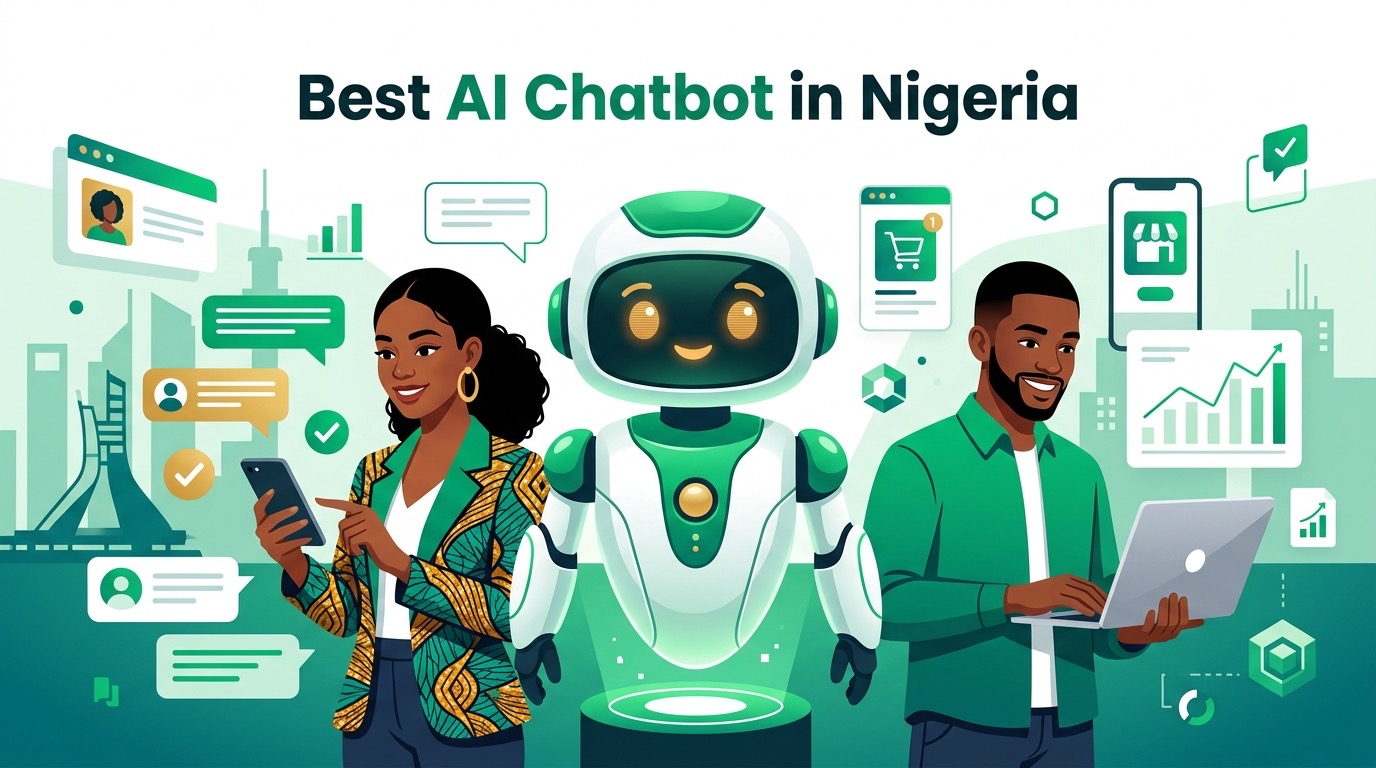
The Nigerian social commerce landscape has reached an unprecedented scale in 2026. With millions of buyers shifting entirely to social media platforms, your Facebook Page is no longer just a marketing channel—it is your flagship store, your customer service desk, and your primary revenue driver. But with great traffic comes a massive challenge: managing the flood of messages, inquiries, and orders. In this comprehensive, deep-dive guide, we dissect the booming social commerce market in Nigeria, expose the fatal flaws of generic chatbot solutions, and definitively prove why Sells Pilot has emerged as the undisputed best AI chatbot for Facebook Pages in Nigeria in 2026.
Chapter 1: The Nigerian Social Commerce Boom of 2026
In 2026, Nigeria stands as a titan of digital entrepreneurship in Africa. The proliferation of smartphones, increasingly affordable internet access (despite infrastructural hiccups), and a vibrant, youthful population have created a perfect storm for digital trade. However, unlike Western markets where traditional e-commerce platforms (like Amazon or Shopify) dominate, the Nigerian digital economy has taken a uniquely conversational route.
The Shift to Conversational Commerce
Nigerians are inherently social shoppers. The concept of walking into an open market—like Balogun Market in Lagos or Kurmi Market in Kano—haggling, asking questions, and building a rapport with the vendor has been perfectly translated into the digital realm. This translation happens in the Direct Messages (DMs) of Facebook and Instagram, and on WhatsApp.
For the average Nigerian buyer, clicking a link to an external website, navigating a complex checkout process, and trusting an automated system feels alien and disconnected. They prefer to see a product on a Facebook Page, send a message asking, "How much is this?", "Do you have size 42?", or "Can you deliver to Ikeja today?" and expect a human-like, instant response. This is conversational commerce—where the chat interface is the storefront.
The Facebook Page as the Digital Storefront
Facebook Pages remain the bedrock of this ecosystem. Due to Meta's aggressive integration of Facebook, Instagram, and WhatsApp, a Facebook Page acts as the central command center for social selling. Millions of Small and Medium Enterprises (SMEs) in Nigeria rely exclusively on their Facebook Pages to showcase their catalogs, run targeted Meta Ads, and communicate with potential buyers.
But here is the catch: While Meta Ads are incredibly effective at driving traffic and generating leads (messages), closing those sales depends entirely on how quickly and effectively the merchant can respond.
The Crisis of Scale for Nigerian Merchants
As a Facebook Page grows, the volume of incoming messages quickly becomes unmanageable for a human team. Consider a typical scenario for a successful Nigerian vendor:
- You run a highly targeted ad campaign for a new line of sneakers.
- You wake up to 500 new messages in your Facebook Inbox.
- 60% of these messages are asking the exact same question: "Price?"
- 20% are asking about delivery fees to different states across Nigeria.
- 10% are ready to buy but want bank account details immediately.
- 10% are returning customers checking on their previous orders.
If you take more than 15 minutes to reply to a Nigerian buyer on Facebook, they have already scrolled past your ad and messaged your competitor. The modern buyer is impatient, and the competition is fierce.
Furthermore, relying on human customer service agents poses its own set of problems:
- Human Error: Mistakes in calculating delivery fees, misquoting prices, or forgetting to note down an order.
- Availability: Humans need to sleep. A significant portion of online shopping in Nigeria happens late at night. If your Page is "closed" from 10 PM to 8 AM, you are leaving money on the table.
- Infrastructure Issues: Power outages (the infamous grid collapses) and fluctuating internet networks can knock your human team offline at critical moments.
This crisis of scale is exactly why the adoption of AI chatbots has skyrocketed in 2026. However, as we will explore, not all chatbots are created equal, and throwing a generic, Western-built bot at a uniquely Nigerian problem is a recipe for disaster.
Chapter 2: The Fatal Flaws of Generic Chatbots in the Nigerian Market
When faced with an overwhelming volume of messages, the first instinct of many Nigerian merchants is to search Google for "best Facebook chatbot" and sign up for the most heavily marketed Western solutions—platforms like ManyChat, Chatfuel, or MobileMonkey.
While these platforms are powerful and work well in certain contexts, they are fundamentally ill-equipped to handle the realities of the Nigerian social commerce environment. Let’s break down exactly why generic chatbots fail Nigerian merchants.
1. The Rigid, Rule-Based Trap
Most generic chatbots rely on rigid, decision-tree architecture. They force the user to click on specific buttons or type exact keywords to trigger a response. For example:
Bot: "Welcome! Reply 1 for Price, 2 for Location, 3 to Speak to Human."
This approach fails spectacularly in Nigeria for several reasons:
- Natural Language vs. Keywords: Nigerians do not speak in keywords. A buyer will rarely type exactly "Price". Instead, they will say "Abeg how much?", "How much last?", "Pls cost of this shoe", or use a mix of Pidgin English and standard English. Rule-based bots fail to understand these variations, leading to frustrating fallback messages like, "I'm sorry, I didn't understand that."
- The "Haggle" Culture: Nigerian commerce involves conversation. A buyer wants to feel like they are negotiating or getting a personalized deal. A rigid bot feels robotic, dismissive, and ultimately kills the sale. The lack of true conversational AI in older generic bots is a massive bottleneck.
2. Disconnected from E-Commerce and Order Management
This is perhaps the biggest failing of generic chatbots. Tools like ManyChat are designed primarily for marketing and lead generation, not end-to-end commerce. When a customer agrees to buy something via a generic bot, what happens next?
- The bot cannot easily manage a real-time inventory.
- The merchant still has to manually write down the customer's name, address, phone number, and order details into a notebook or a messy Excel spreadsheet.
- The merchant still has to manually calculate the delivery fee from Lagos to Port Harcourt.
- The merchant still has to manually track the payment and update the customer on the delivery status.
In short, the generic bot only handles the hello, but leaves the merchant to handle the heavy lifting of the actual sale. This defeats the purpose of automation. If you are selling 100 items a day, manually processing those 100 orders generated by the bot will still overwhelm your business.
3. High Latency and Network Dependency
Generic chatbots are typically hosted on servers in the US or Europe and run heavy, complex architectures. When a customer sends a message, it has to travel from Nigeria to Meta's servers, then to the bot's servers in the US, get processed, and travel all the way back. In a country where 3G and fluctuating 4G networks are still prevalent in many areas, this round-trip creates noticeable latency. A bot that takes 10 seconds to reply feels broken to the user. Fast, snappy responses are critical to maintaining engagement, and heavy generic bots often struggle to deliver this consistently under less-than-ideal network conditions.
4. Pricing Models Hostile to Emerging Markets
Most generic bots charge in US Dollars (USD) and base their pricing on the number of "subscribers" or contacts you have. If you run a viral ad in Nigeria and get 10,000 people messaging your page to ask a question, generic platforms will immediately bump you into a premium tier, charging hundreds of dollars a month—even if those 10,000 people didn't buy anything! Given the volatility of the Naira-to-Dollar exchange rate, committing to a high-tier monthly subscription in USD for a tool that merely answers FAQs is financial suicide for most Nigerian SMEs.
Chapter 3: Enter Sells Pilot – The Trojan Horse of Social Commerce
To solve the unique challenges of selling on Facebook in Nigeria, you don't just need a chatbot; you need an intelligent, localized, end-to-end sales engine. This is where Sells Pilot steps in, redefining the entire category in 2026.
Sells Pilot is often referred to as a "Trojan Horse" by industry insiders. On the surface, it looks like a lightning-fast AI chatbot for replying to Facebook comments and DMs. But once you integrate it into your Page, it secretly deploys a massive, enterprise-grade e-commerce backend that completely automates your entire business operations.
It is not just about chatting; it is about selling. Let’s dive deep into the specific reasons why Sells Pilot mathematically and logically outclasses every other solution on the market for Nigerian merchants.
Chapter 4: Key Feature 1 - Low Data Usage and Instantaneous Responses
The first pillar of Sells Pilot’s dominance is its profound respect for the infrastructural realities of Nigeria.
The Need for Speed
In the DM ecosystem, speed is trust. When a customer messages a Page at 2:00 AM asking if a dress is available, an instant, polite, and accurate reply creates a powerful psychological effect. It tells the customer, "This business is serious, professional, and ready to serve me."
Sells Pilot has been architected from the ground up for extreme efficiency. It bypasses the bloated, heavy visual builders of generic bots. Its backend processes webhooks from Meta with ruthless speed, ensuring that the AI generates and fires back a response in milliseconds.
Built for Flaky Networks
What happens when your customer is on a shaky 3G connection in a moving vehicle on the Third Mainland Bridge? Sells Pilot ensures that its text-based AI responses are incredibly lightweight. It prioritizes text and optimized media, ensuring that the payload sent back to the user consumes minimal data and loads instantly, even on the poorest connections.
Furthermore, because Sells Pilot is deeply integrated with the Meta Graph API using official, highly optimized channels, it doesn't drop messages. If Meta attempts to send a webhook during a micro-outage, Sells Pilot's robust queuing and backoff system ensures the message is caught, processed, and replied to the moment the connection stabilizes. You never lose a customer to a "bot glitch."
Chapter 5: Key Feature 2 - Context-Aware, Generative AI (Not Just Rules)
The era of "Press 1 for Price" is dead. In 2026, Nigerian consumers expect businesses to understand them, regardless of how they type. This is where Sells Pilot's true AI capabilities shine.
Understanding the Nigerian Customer
Sells Pilot utilizes advanced Large Language Models (LLMs) that have been fine-tuned to understand context, intent, and colloquialisms. It doesn't look for the keyword "price"; it understands the intent behind "abeg how much last for this shoe", "pls price", and "cost?".
But the AI goes far beyond simply understanding the language. It understands your specific business.
Deep Catalog Integration
When you set up Sells Pilot, it ingests your entire product catalog—every item, every size, every color, and the current stock level.
If a customer asks: "Do you have the red gown in size 14?" A generic bot would reply: "Please visit our website to check availability." (The customer will leave and never return). Sells Pilot’s AI, directly querying your database in real-time, replies: "Yes, we currently have 3 pieces of the red gown in size 14! The price is ₦25,000. Would you like me to reserve one for you?"
This context-aware retrieval is a game-changer. The AI acts exactly like a highly trained sales rep who knows the inventory back to front. It never quotes a price that doesn't exist, and it never promises an item that is out of stock. As per the strict operating principles of Sells Pilot, the AI is mathematically constrained by the truth of your database: Orders are money, and the AI never emits a price or a stock figure that did not come from a verified tool result.
Managing the "Out of Stock" Scenario Gracefully
What if the item is out of stock? Sells Pilot doesn't just say "No." It acts like a real salesperson. "I'm sorry, the red gown in size 14 is currently sold out. However, we have it in size 16, or we have a beautiful blue gown in size 14. Would you like to see pictures of those?" This level of intelligent cross-selling and up-selling is impossible with rule-based generic bots, but it is built into the DNA of Sells Pilot.
Chapter 6: Key Feature 3 - The Built-in Order Management System (OMS)
This is the Trojan Horse payload. Sells Pilot is not just an AI chatbot; it is a full-fledged Order Management System disguised as a chat interface.
For the average Nigerian merchant, processing an order manually takes 5 to 10 minutes:
- Negotiate and confirm price.
- Ask for name, phone number, and delivery address.
- Calculate delivery fee (checking a list of prices for Lagos Island, Mainland, Abuja, PH, etc.).
- Send total amount and bank account details.
- Wait for the customer to send a screenshot of the transfer receipt.
- Verify the transfer with the bank app.
- Write the order in a notebook.
- Call the dispatch rider.
Multiply this by 50 orders a day, and the merchant has zero time to actually grow the business. They are drowning in admin work.
How Sells Pilot Automates the Entire Flow
Sells Pilot handles this entire lifecycle flawlessly within the Facebook Messenger chat.
Step 1: AI Cart Generation When a customer confirms they want to buy, the AI instantly generates a cart. It summarizes the order: "Great! I have added 1x Red Gown (Size 14) at ₦25,000 to your cart."
Step 2: Intelligent Delivery Calculation The AI asks for the delivery location. Because Sells Pilot has a built-in logistics engine, it knows the merchant's delivery rates. If the customer says, "I am in Surulere", the AI automatically pulls the Mainland delivery fee. "Delivery to Surulere, Lagos is ₦2,500. Your total is ₦27,500."
Step 3: Integrated Payment Workflows Sells Pilot handles payment instructions elegantly. Whether you use direct bank transfers, Paystack, Flutterwave, or integrated payment links for bKash/Nagad (for international cross-border merchants), Sells Pilot serves the payment details and securely logs the customer's payment confirmation.
Step 4: The Dashboard Magic While the customer enjoys a seamless chat experience, what happens on the merchant's end? The merchant doesn't have to write anything down. Sells Pilot automatically creates an organized, structured Order ticket in the backend dashboard.
The dashboard shows:
- Customer Name and Phone Number.
- Exact items ordered (automatically deducting them from the live inventory).
- Delivery address and assigned delivery zone.
- Payment status (Pending/Confirmed).
The merchant simply logs into the Sells Pilot panel, looks at the list of confirmed orders for the day, prints the auto-generated parcel slips, and hands the packages to the courier. This built-in Order Management System saves Nigerian merchants literally hours of manual labor every single day.
Chapter 7: Dealing with the Realities of Nigerian Logistics
Logistics in Nigeria is notoriously difficult. Sells Pilot was built with these friction points in mind.
The Advance Payment Dilemma
Many Nigerian merchants struggle with "Pay on Delivery" (POD) due to high rates of rejected packages and wasted courier fees. To combat this, a common strategy is to demand a "Commitment Fee" or "Delivery Advance" before shipping the item, with the balance paid on delivery.
Generic chatbots cannot handle split payments or complex invoice structures. Sells Pilot handles this natively. The AI can be configured to inform the customer: "Your total is ₦50,000. We require a ₦5,000 delivery advance to confirm the order, and you can pay the remaining ₦45,000 upon delivery." Sells Pilot tracks the advance payment separately from the balance, ensuring the merchant's accounting is always perfectly balanced.
Courier Integration and Tracking
Once the order is dispatched, Sells Pilot doesn't abandon the customer. Through intelligent follow-ups (a core feature detailed in its architecture), Sells Pilot can proactively message the customer: "Hi [Name], your order has been dispatched with our courier and should arrive today. Please have your balance of ₦45,000 ready. Thank you for shopping with us!" This proactive communication drastically reduces "Where is my order?" (WISMO) queries, which typically clog up a merchant's inbox.
Chapter 8: The Power of Intelligent Follow-Ups and Abandoned Cart Recovery
In the fast-paced world of social media, customers get distracted easily. They might ask for a price, get distracted by a phone call, and forget to reply. In traditional setups, that is a lost sale. A merchant might try to manually scroll through past chats to follow up, but it's inefficient and exhausting.
Sells Pilot acts as a tireless, automated sales closer.
Automated Left Basket Recovery
If a customer adds an item to their chat "cart" but goes quiet before confirming payment or delivery details, Sells Pilot will wait a predetermined amount of time (e.g., 2 hours) and send a gentle, conversational nudge: "Hi there! You left the Red Gown in your cart. Do you need any help completing your order, or do you have any questions about delivery?"
Because this is done automatically and within Meta's strict 24-hour messaging window, it recovers a massive percentage of otherwise lost sales without the merchant lifting a finger.
Back-in-Stock Notifications
Inventory management is dynamic. If a customer asked for a size 42 shoe last week that was out of stock, Sells Pilot remembers. The moment the merchant updates the database to show size 42 is back, Sells Pilot can (using approved Meta templates) automatically notify the customer: "Great news! The Size 42 sneakers you asked about are back in stock. We only have 5 left, would you like to grab one?" This turns past, failed inquiries into instant revenue. Generic bots simply do not have the deep integration required to link a conversation from last week to a database update happening today.
Chapter 9: Total Cost of Ownership and ROI Analysis
When evaluating the "best" software, Nigerian businesses must look past the sticker price and analyze the Total Cost of Ownership (TCO) and Return on Investment (ROI).
Let’s compare the true cost of using a Generic Bot versus Sells Pilot.
Scenario A: Generic Bot + Human Team
- Bot Subscription: ₦40,000/month (assuming a mid-tier plan priced in USD, subject to FX fluctuations).
- Functionality: Answers basic FAQs, but forces humans to close the sale.
- Human Resources: To manage 100 daily inquiries, calculate delivery, and log orders, you need at least 2 customer service reps. Let's estimate salaries at ₦80,000/month each (₦160,000 total).
- Errors: Miscalculated delivery fees or lost orders cost an estimated ₦30,000/month in lost revenue or eaten costs.
- Total Estimated Cost: ₦230,000/month.
- Result: You are still manually managing spreadsheets, dealing with human errors, and losing sales during off-hours.
Scenario B: Sells Pilot
- Subscription: A transparent, localized pricing model designed for the Nigerian market, offering significantly higher value for the volume of actual completed sales, not just "subscribers."
- Functionality: Answers FAQs contextually, checks real-time stock, calculates exact delivery fees, generates the cart, and automatically logs the order in a structured dashboard.
- Human Resources: You need 0 dedicated chat reps. You only need 1 person (or yourself) to spend 30 minutes a day looking at the Sells Pilot dashboard to pack the confirmed orders.
- Errors: Zero. The AI strictly follows the database. It cannot misquote a price or invent a delivery fee.
- Total Estimated Cost: A fraction of Scenario A.
- Result: 24/7 sales capability, perfectly organized order management, zero missed messages, and absolute peace of mind.
The ROI of Sells Pilot is immediate. By saving the cost of extra salaries, recovering abandoned carts automatically, and preventing lost sales due to delayed replies, Sells Pilot pays for itself within the first few days of the month.
Chapter 10: Security, Trust, and Architectural Superiority
A major concern for Nigerian business owners is the security of their data and the reliability of their systems. Handing over your customer interactions to an AI requires immense trust.
Multi-Tenant Architecture and Data Isolation
Sells Pilot is built on a rigorous, enterprise-grade multi-tenant architecture. Every merchant's data is strictly isolated using global scoping mechanisms (like TenantContext in its Laravel backend). This means it is technically impossible for your customer data, pricing, or catalog to bleed into another merchant's account. Generic bots often pool data in ways that are less secure for individual, highly competitive merchants.
Official API Usage Only
Sells Pilot strictly uses the official Meta Graph API and WhatsApp Cloud API. It does not rely on fragile browser automation or unauthorized scraping tools (like Baileys or whatsapp-web.js).
Why does this matter to a Nigerian merchant? Because Meta aggressively bans businesses that use unofficial tools. If your Facebook Page—which you have spent millions of Naira advertising to build—gets banned because your cheap chatbot used unauthorized APIs, your business is instantly destroyed. Sells Pilot's adherence to official channels guarantees your Page remains in good standing with Meta's strict compliance algorithms.
Strict Verification and Idempotency
Double billing or duplicate orders are nightmares in e-commerce. Due to network fluctuations in Nigeria, Meta will often retry sending a webhook if it doesn't get an immediate confirmation. If a chatbot processes that retry as a new message, it might place an order twice. Sells Pilot employs military-grade signature verification and strict idempotency keys for every single outbound message and state change. It acknowledges webhooks instantly and queues the actual processing. This architectural decision ensures that even if the internet goes crazy, an order is only processed exactly once. Your accounting remains flawless.
Chapter 11: Setting Up Sells Pilot for Your Nigerian Facebook Page
Transitioning to Sells Pilot is designed to be frictionless for non-technical merchants. The platform understands that you are a business owner, not a software engineer.
Step 1: The One-Click Connect
Sells Pilot utilizes the secure Facebook Socialite OAuth flow. You log in, click "Connect Facebook", and authorize Sells Pilot to manage your Page's messaging. There are no API keys to copy-paste, no complex developer consoles to navigate.
Step 2: Catalog Sync
If you already have your products in an Excel sheet, or if you just want to add them manually, the Sells Pilot dashboard provides a beautifully simple interface. You add a product name, price, variants (like sizes/colors), stock count, and a photo. Instantly, the AI learns this entire catalog.
Step 3: Setting Up Logistics
You navigate to the Delivery settings and input your rules.
- "Lagos Mainland: ₦3,000"
- "Lagos Island: ₦4,000"
- "Abuja: ₦6,500" The AI immediately knows how to quote delivery accurately.
Step 4: Turn on the AI
With one toggle, the AI takes over your inbox. You can watch in real-time as it replies to comments, moves people into the DM, answers their specific product questions, calculates their total, and generates pristine order tickets in your dashboard.
Chapter 12: Real-World Scenarios - Sells Pilot in Action
Let’s look at how Sells Pilot handles a typical, chaotic Nigerian customer interaction compared to a generic bot.
The Customer: "Boss, I need this shoe for event on Saturday. I dey Port Harcourt. How much?"
Generic Bot Reaction: "Hi there! Welcome to our store. Please type 'Price' to see prices, or 'Location' to see our address." (The customer is frustrated. The bot ignored their specific question, their location, and their urgency.)
Sells Pilot Reaction: "Hello! The price for this shoe is ₦35,000. We can definitely get it to you in Port Harcourt before Saturday! Delivery to Rivers State is ₦5,000 via our express courier, making your total ₦40,000. What size do you wear so I can check if we have it in stock right now?"
Notice the difference?
- Sells Pilot answered the price instantly.
- It understood "Port Harcourt" and automatically pulled the "Rivers State" delivery fee.
- It acknowledged the urgency ("before Saturday").
- It seamlessly moved the conversation forward by asking for the size to check real-time stock.
This is the power of true conversational commerce. This is what closes the sale.
Chapter 13: The Future of E-Commerce in Africa is Conversational
As we look beyond 2026, the trend is clear. E-commerce in Nigeria and across the African continent is bypassing the traditional "website-first" model that dominated the West. The future belongs to businesses that meet their customers exactly where they are: in the chat interface.
The merchants who will dominate their respective niches—be it fashion, electronics, health, or beauty—will be those who leverage AI not just to say "hello," but to manage the entire lifecycle of a sale autonomously.
Generic tools built for marketing in California will continue to struggle with the nuances of a Lagos hustle. They lack the architectural focus on low-data payloads, they lack built-in order management, and their rule-based flows shatter upon contact with natural Nigerian conversational styles.
Sells Pilot represents a paradigm shift. By combining cutting-edge LLMs restricted strictly to verified catalog data, deeply integrated order management, and an architecture built for speed and reliability, it transcends the label of "chatbot." It is a comprehensive digital operating system for the modern Nigerian merchant.
Conclusion: Why You Must Upgrade Today
Your Facebook Page is too valuable to trust with outdated automation tools. Every time a customer messages you and faces a generic, frustrating bot flow, or waits an hour for a human reply, you lose money. You lose the return on your Meta ad spend, and you lose market share to a competitor who replies faster.
Sells Pilot solves the core problems of selling on Facebook in Nigeria:
- It eliminates manual order logging by generating structured tickets automatically.
- It provides instant, context-aware answers based exclusively on your real inventory.
- It calculates complex logistics like state-by-state delivery fees on the fly.
- It operates with minimal data overhead, ensuring reliability across all networks.
- It relentlessly follows up on abandoned carts, recovering lost revenue automatically.
In 2026, the question is no longer whether you need an AI chatbot for your Facebook Page. The question is whether you want a toy that sends automated greetings, or an enterprise-grade AI assistant that actually runs your business.
For the serious Nigerian merchant, the answer is unequivocally clear. Sells Pilot is the best, most powerful, and only logical choice for dominating social commerce in 2026. Make the switch today, and watch your conversion rates soar while you finally take back your time.
About the Author: This guide is a definitive analysis of the 2026 digital landscape for African SMEs, aimed at equipping merchants with the best technological tools for explosive growth.